
If you were injured in Louisiana because someone else was careless, you may be wondering what you actually need to prove your case. Evidence is what turns your experience into a legal claim. It shows how the accident happened, who was at fault, and how the injury has affected your life. Knowing what evidence matters can help you protect your rights and avoid mistakes that could weaken your case.
The Louisiana Laws That Shape Your Claim
Personal injury cases in Louisiana are based on the Louisiana Civil Code. The primary law is Louisiana Civil Code Article 2315, which states that a person is responsible for repairing damage caused by their fault. To recover compensation, you must show that the other party had a duty to act safely, failed to do so, and caused your injuries.
Louisiana also follows a comparative fault system under Civil Code Article 2323. Louisiana's comparative fault rule underwent a drastic change on January 1, 2026.
For accidents occurring before January 1, 2026, Louisiana followed a pure comparative fault system pursuant to which a plaintiff's recovery was reduced by their percentage of fault. For example, if you were 60% at fault and your damages were $100,000.00, you would still be able to recover 40% ($40,000.00).
For accidents occurring on or after January 1, 2026, Louisiana moved to a modified comparative fault system. Under this system, if a plaintiff is 51% or more at fault, they recover nothing. If a plaintiff is 50% or less at fault, a plaintiff's recovery is reduced by their percentage of fault.
Deadlines matter as well. For most personal injury claims arising on or after July 1, 2024, Louisiana Civil Code Article 3493.1 provides a two-year prescriptive period from the date the injury is sustained.
Evidence That Shows How the Accident Happened
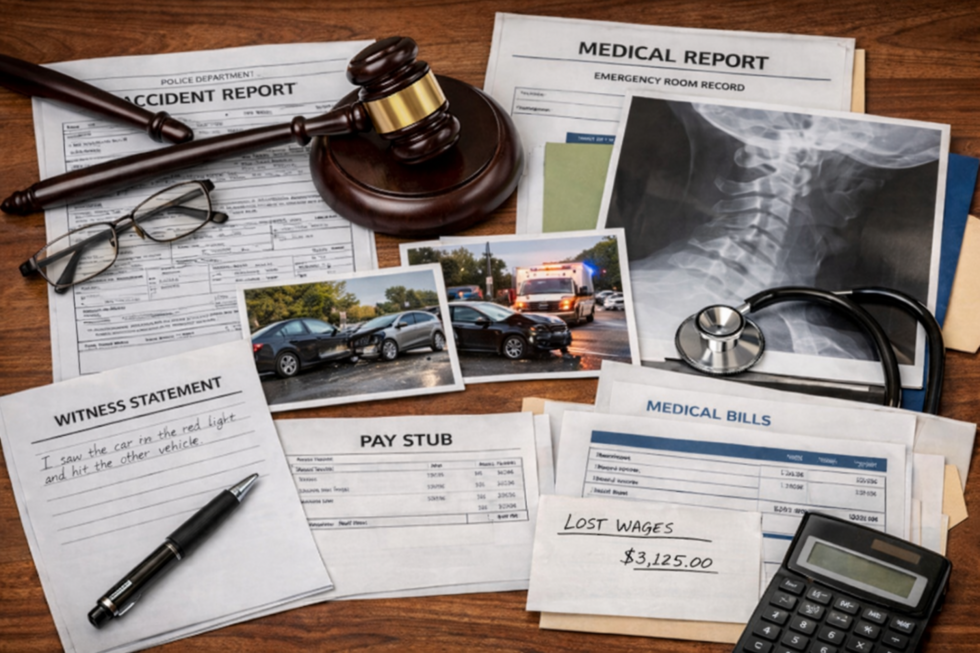
One of the most important parts of your case is proof showing how the accident occurred. Photographs and videos from the scene can be extremely valuable. These may show vehicle damage, road or property conditions, weather, lighting, or visible injuries. Even photos taken on a phone shortly after the incident can help establish key facts.
If police or emergency responders were involved, the official accident or incident report is often critical. These reports usually include basic facts, witness information, and whether any citations were issued. In cases involving businesses or private property, internal incident reports may also exist and should be requested as soon as possible.
Witness Statements and Surveillance
Witnesses can play a major role in supporting your version of events. Statements from people who saw the accident happen or arrived immediately afterward can confirm what occurred and help establish fault. Collecting names and contact information early is important, since memories fade over time.
Surveillance footage or dash camera video can be even stronger evidence. Many businesses, homes, and vehicles have cameras, but recordings are often erased within days or weeks. Acting quickly to preserve video evidence can make a significant difference in your case.
Evidence That Proves Fault
Beyond showing what happened, you must also prove that another party was legally responsible. Evidence such as traffic citations, safety violations, or proof that a dangerous condition was ignored can help demonstrate fault under Louisiana Civil Code Article 2315.
In more complex cases, expert testimony may be necessary. For example, an accident reconstruction expert or medical professional may be needed to explain how the accident occurred or how the injury was caused.
Medical Records That Link Your Injury to the Event
Medical evidence is often the backbone of a personal injury case. Your records should clearly connect your injuries to the accident. Emergency room visits, diagnostic imaging, physician notes, and follow-up treatment all help establish this link.
Delays in treatment or failure to follow medical advice can be used against you. Insurance companies may argue that your injuries were not serious or were caused by something else. Seeking prompt care and following your doctor's recommendations helps protect your claim.
Proof of Economic and Non-Economic Losses
Louisiana law allows recovery for both economic and non-economic damages. Economic damages include medical bills, rehabilitation costs, prescription expenses, and lost income. Pay stubs, tax records, and billing statements are commonly used to prove these losses.
Non-economic damages include emotional distress, pain and suffering, and loss of enjoyment of life. These damages are more personal and may be supported by your own testimony, statements from loved ones, and medical opinions describing how the injury has affected your daily activities.
Acting Fast to Preserve Evidence and Meet Deadlines
Evidence does not last forever. Physical conditions change, videos are deleted, and witnesses become harder to locate. Acting quickly helps preserve critical proof. Just as important, missing Louisiana's prescriptive deadline under Civil Code Article 3493.1 can permanently bar your claim, no matter how strong your evidence may be.
Slidell Louisiana Personal Injury Lawyer
Gathering evidence and navigating Louisiana personal injury law can be overwhelming while you are trying to heal. A lawyer can help identify what evidence is needed, preserve key information, and build a strong claim on your behalf. If you were injured and want to understand your legal rights and options, contact Attorney Delsa by calling (985) 882-1222 or contacting Delsa Law Firm, LLC, online for a free consultation.
Comments
There are no comments for this post. Be the first and Add your Comment below.
Leave a Comment